Boat Storage Maintenance Tips: Keeping Your Boat in Top Shape
From luxury yachts to the humble family canoe, every boat owner knows that proper storage is key to maintaining your vessel's longevity and performance. But it's not just about tucking your boat away when it's out of use; specific maintenance steps are crucial to keeping your boat in top-notch condition all year round.
Whether you're a seasoned mariner or a weekend sailor, our comprehensive guide on boat storage maintenance will equip you with essential tips and tricks to ensure your prized possession stays shipshaped even during off-season. So, anchors aweigh as we delve into the world of proactive boat care at storage facilities!
Winterizing Your Boat's Engine
As the winter season approaches and boating activities wind down, it becomes crucial to properly winterize your boat's engine to protect it from potential damage caused by freezing temperatures. Winterizing your boat's engine involves a series of steps to ensure that any remaining water is removed and replaced with coolant. By taking these preventive measures, you can extend the longevity of your boat's engine and avoid costly repairs in the future.
One of the first steps in winterizing your boat's engine is flushing out any remaining water that could freeze and cause damage. This is particularly important if you live in a region with cold climates where freezing temperatures are common. To do this, you'll need to connect a freshwater hose to an appropriate intake port on your engine and run water through it for several minutes. This process helps clear out any saltwater or contaminants from the cooling system.
Once the water has been flushed out, it's time to drain the remaining water from the engine block, exhaust manifolds, and other components. This step ensures that there is no trapped water that could expand and cause cracks or corrosion during freezing conditions.
Draining Water and Adding Coolant
After ensuring that all water has been properly drained from your boat's engine, the next step in the winterization process is to add coolant. Coolant helps protect the engine from freezing temperatures by lowering the freezing point of the remaining fluids. This is especially important if you reside in an area where temperatures often plummet below freezing during the winter months.
To add coolant, you'll need to locate the appropriate reservoir or expansion tank on your boat's engine. Open the cap and pour in a 50/50 mixture of antifreeze and water into the reservoir until it reaches the recommended level indicated by the manufacturer.
Once you've added the coolant mixture, ensure that all caps and covers are securely fastened before storing your boat for the winter. Checking for any leaks or signs of damage is also essential at this stage. Keep in mind that it's always best to consult your boat's owner manual or seek professional advice to ensure you're using the correct type and ratio of coolant for optimal protection.
Now that we've covered the steps involved in winterizing your boat's engine, it's important to note that there are additional maintenance tasks you should consider to keep your boat in top shape during storage.
Removing and Storing the Battery
When it comes to preparing your boat for storage, one crucial aspect is removing and storing the battery properly. Why is this important? Well, leaving the battery connected can lead to two major issues: theft and battery drain. By disconnecting and removing the battery, you not only safeguard it from potential theft but also prevent unnecessary drainage.
One of the first steps in this process is ensuring that the battery is fully charged before removal. A fully charged battery has a better chance of holding its charge during storage. In fact, a well-maintained battery can hold its charge for approximately six to twelve months.
To begin, make sure the engine and all electrical systems are turned off. Then, disconnect the negative (black) cable first, followed by the positive (red) cable. This order helps prevent accidental short-circuiting and keeps you safe.
Once disconnected, give your battery a thorough cleaning using a mix of baking soda and water. This helps remove any built-up dirt or corrosion that may have accumulated over time. Rinse it with clean water afterward and pat it dry.
Next, find an appropriate storage location for your battery. Ideally, this should be in a cool and dry place that is well-ventilated and away from direct sunlight. You could consider using a battery box or a specialized storage case designed specifically for boat batteries.
Before storing the battery, it's essential to protect it further by applying a thin layer of petroleum jelly or terminal protector spray to the terminals and cable ends. This acts as a barrier against corrosion and extends the life of your battery.
With your boat's battery safely stored away, let's discuss another critical aspect of boat storage maintenance: protecting your vessel from salt damage.
Protecting Your Boat from Salt Damage
If you're fortunate enough to have access to saltwater for boating adventures, you'll understand how vital it is to protect your boat from salt damage. Saltwater can be highly corrosive and cause significant damage to various components of your vessel if not properly addressed.
One of the first steps in protecting your boat from salt damage is thoroughly rinsing it with freshwater after each outing. Pay special attention to areas like the hull, engine, propellers, and metal parts. Removing salt residue promptly can help prevent corrosion from setting in and prolong the life of your boat.
In addition to regular rinsing, applying marine-grade corrosion inhibitors or protective coatings can provide an extra layer of defense against salt damage. These products create a barrier between the metal surfaces and saltwater, reducing the likelihood of corrosion.
When storing your boat for an extended period, consider using desiccant bags or dehumidifiers within the cabin area to control humidity levels. High humidity can contribute to mold growth, musty smells, and other moisture-related issues that can damage your boat's interior over time.
Overall, protecting your boat from salt damage requires a combination of consistent maintenance routines and proactive measures. By rinsing your boat after each outing, applying protective coatings, and controlling humidity levels during storage, you can ensure that your vessel remains in top shape, ready for the next thrilling adventure on the water.
Controlling Humidity and Moisture
One of the primary concerns when it comes to boat storage maintenance is controlling humidity and moisture. Excessive moisture in the storage environment can lead to mold, mildew, and corrosion, which can cause significant damage to your boat. To keep your boat in top shape during storage, here are some key tips for controlling humidity and moisture.
Firstly, ensure that the storage facility or area where you store your boat has proper ventilation. Good airflow helps reduce condensation and keeps the air fresh inside the storage space. If your storage area lacks natural ventilation, consider using dehumidifiers or fans to circulate the air and regulate humidity levels effectively.
Another effective strategy is to use desiccant products inside your boat. Desiccants such as silica gel packets or moisture absorbers help absorb excess moisture in the air, preventing it from accumulating on surfaces and causing damage. Place these desiccant products in various areas of your boat, such as cabinets, compartments, and bilge areas.
While controlling humidity is crucial, it's also important to strike a balance. Extremely low humidity levels can lead to the shrinkage or cracking of certain materials on your boat. So finding that sweet spot with moderate humidity levels is essential.
Now that we've explored methods for controlling humidity and moisture during boat storage, let's shift our focus to another crucial aspect of boat storage maintenance: cleaning and coating.
Cleaning and Coating
Proper cleaning and coating play a vital role in maintaining the integrity and appearance of your boat while it's in storage. Cleaning your boat thoroughly before storage helps prevent dirt, grime, and algae from becoming ingrained on the surfaces. Here are some key steps to follow for effective cleaning and coating.
Let's say you own a motorboat that has spent a long summer in the water, accumulating dirt, salt, and other substances on its exterior. Neglecting to clean and coat the boat properly before storage can result in stubborn stains, corrosion, or even damage. Therefore, investing time in thorough cleaning becomes essential.
Start by decluttering your boat's interior, removing any personal belongings or loose items. Wipe down all surfaces, including seats, cabinets, and flooring. Use appropriate cleaners that are safe for the specific materials of your boat to avoid any potential damage.
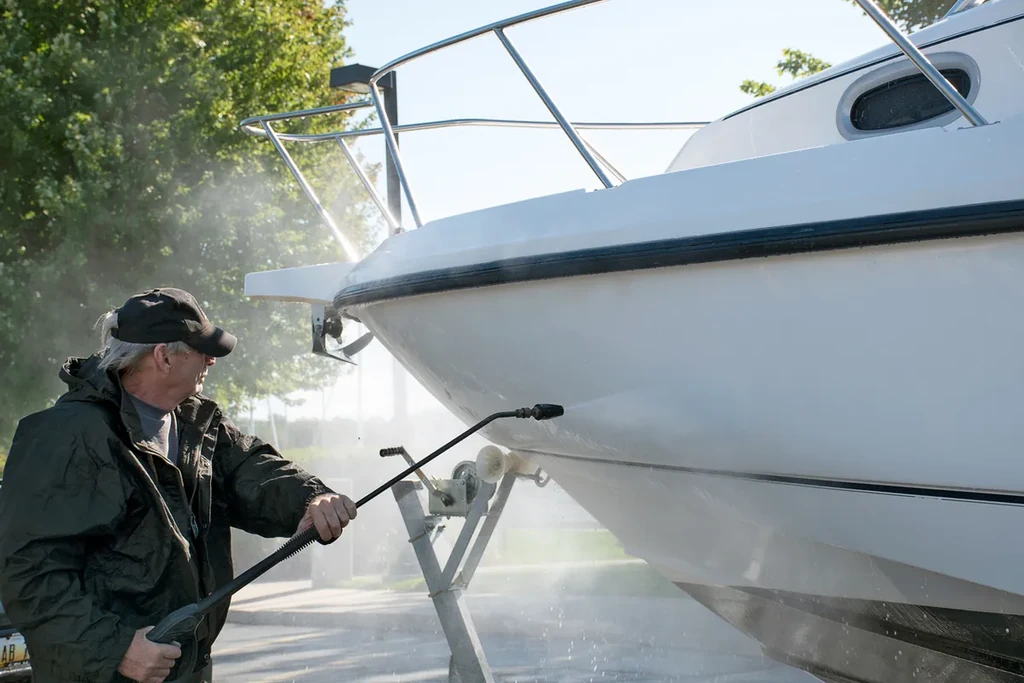
When it comes to the exterior of your boat, using a gentle boat wash solution mixed with water is ideal. Use a soft brush or sponge to remove any dirt or grime. Pay special attention to areas prone to buildup, like the hull, propellers, and outdrives. Rinse thoroughly with fresh water to remove any residue.
Think of cleaning and coating your boat like giving it a rejuvenating spa treatment after a long season out on the water. By meticulously removing all contaminants and providing protective coatings, you're ensuring its longevity and pristine condition.
After cleaning, consider applying a protective coat of wax or specialized marine-grade sealant to help preserve the finish and protect against UV rays and oxidation during storage. This coating acts as a barrier between your boat's surfaces and environmental elements.
Now that we've covered the importance of cleaning and coating your boat during storage, let's move onto our final section: A comprehensive boat storage maintenance checklist.
Comprehensive Boat Storage Maintenance Checklist
Proper boat storage maintenance is crucial to ensuring that your beloved vessel remains in top shape when it's not out on the water. By following a comprehensive checklist, you can minimize the risks of damage and deterioration during storage, allowing for smoother sailing when it's time to hit the waves again.
First and foremost, cleaning your boat thoroughly before storage is essential. This includes both the interior and exterior. Remove any personal belongings or items that could be damaged by prolonged storage, such as electronics or decorations. Declutter the boat and wipe down the seats, cabinets, and other surfaces to remove any dirt or residue. By starting with a clean slate, you can prevent grime buildup and potential damage from occurring over time.
Next, disconnect and remove the battery to prevent theft and drain. A fully charged battery can typically hold its charge for about 6-12 months, but it's always best to store it separately in a cool, dry place. Be sure to follow proper safety precautions when handling batteries and consider using a battery tender or maintainer if needed.
Performing engine and fuel system maintenance is another crucial step in preparing your boat for storage. Start by removing water from the engine using a hose or other appropriate methods recommended by your boat's manufacturer. Additionally, use compressed air to blow out any remaining water from the engine block. For colder climates, it's essential to winterize the engine properly with antifreeze according to manufacturer guidelines.
Now that we've covered cleaning and engine maintenance, let's move on to another aspect of boat storage maintenance: the fuel system.
Boat Storage Maintenance: Fuel System
Before putting your boat into storage, fill up the gas tank and add a fuel stabilizer. This helps prevent corrosion caused by condensation and ethanol breakdown. A full tank reduces the space available for moisture to accumulate and minimizes the potential for varnish or gum deposits. Adding a fuel stabilizer ensures that the gasoline remains in good condition during the storage period.
Lastly, cover your boat with a tarp or suitable cover to provide protection from dust, debris, and potential damage. Choose a cover specifically designed for boats that provides a snug fit and is breathable to prevent mold or mildew growth. Additionally, consider using supports or structures such as boat stands to distribute weight evenly and prevent sagging of the cover.
Choose StorageMax: Keep Your Boat Safe and Well-Maintained!
At StorageMax, we invite you to choose our facility for the safety and maintenance of your valuable boat. We understand that your boat is not just a possession but a cherished investment. With our secure and well-maintained storage facility, you can have peace of mind that your boat is in good hands.
Our dedicated team ensures the utmost security and cleanliness of our storage spaces, allowing your boat to stay in top condition. Choose us to safeguard and maintain your boat, so it's always ready for your next adventure. Contact StorageMax today!