How to Prepare Your Boat or RV for Use After Winterization
When the winter season is over, and you know it's the time for the great cruising or trip adventures in the spring and summer, no one should blame you for the excitement. However, there are a few steps that you should take to de-winterize your RV or boat and make sure your first cruise will not give you problems, create more costly repairs, or reduce its lifespan.
It is a great feeling to know that your RV or boat is safe and in good condition in a storage facility. But despite the efforts, many things can happen over the winter months, including critters, nests, and hoses cracks. And in addition to regularly maintaining your boat or RV, you'll want to inspect, replace carefully, and repair boat or RV accessories as required before taking them out for the adventure.
The following de-winterizing guide will assist you in ensuring your RV or boat is prepped and ready to go:
Read the Owner's Manual
If you're a boat or RV owner, one of the best ways to protect your investment is to carefully read your owner's manual. This will help you avoid any problems or difficulties in future maintenance, such as ensuring that all of those appliances are working properly, so they don't give out on you during winter time. You can even find information such as built-in winterizing features, taking care of your boat's or RV's, and other useful information.
Check the Battery
You will want to make sure the terminals of your battery are well cleaned; using a small wire brush will do a good job of removing dirt, rust, or grime. You'll also need to check for corrosion in the terminals; you can protect them from more damage by applying lithium grease on their posts. Reconnect the cables of the battery if they were disconnected.
Batteries lose their power over time if they are not used, so it is important to charge them first before using your boat or RV again. In the future, when you're winterizing your RV or boat, remember to use a trickle charger to assist in the maintenance of your charge and prolong the battery life.
Change Engine Fluids
Before starting your journey or cruise, you should top up or change engine fluids, including oil, brake fluid, coolant, wiper fluid, and transmission fluid. You should ensure that each system is free from any leaks by conducting a thorough inspection before your first excursion. Oil is also helpful for keeping your vehicle in a safe and good condition. It can prevent fuel lines from cracking because of cold temperatures, which are common during the winter months.
Tires
Another thing that you should check when you get into your RV storage unit after winterization is whether your trailer's or RV's tire is in good condition. When left for an extended period without usage, tires will lose pressure. You need to inflate the tires after winterizing your RV or replace them if you see any signs of rot or deterioration.
Plumbing System
Flush the antifreeze from the storage tank and all potable water lines after storing your RV for the winter. Long-term RV storage may lead to bacteria and mold growth in the potable water system, and you will need to check to make sure your water supply is safe.
Inspect the Gas Tank and Fuel Lines
It is common for boats or RVs' fuel lines and gas tanks to develop rust and corrosion during winter storage. That's why it is advisable to fill your gas or fuel tank to prevent corrosion and use a fuel stabilizer to avoid evaporation of the gas before storing your RV or boat in a self-storage facility. Fuel lines and gas tanks should be inspected for cracks and replaced as required when you're getting your boat or RV ready for its first expedition after winter.
Drain Tanks
You will need to blow out your RV water system, and the first place to start is the freshwater holding tank. You will have to open the petcock or valve to release water. Also, drain the sink, shower, and toilet whose holding tanks are associated with the RV's plumbing system. Then clean the system. Some RVs have self-cleaning systems, while others will require to be manually cleaned.
Test the Electronics
You should test all your electronic components on your RV or boat, including control panels, knobs, and switches. Check all the lighting in the interior and exterior of your trailer, recreational vehicle, or boat. You don't want to be in the dark if you experience unexpected failure. You should also ensure your electric heating element works well to make your excursion or trip comfortable.
Blow Out RV Water Lines
To avoid the freezing of the pipes, attach a compressed adapter to the position of the intake line of the water if your camper doesn't have a drain plug. Then use an air compressor to get rid of moisture from the water lines. After the work, return any caps, turn faucets off, and close petcocks after driving the moisture.
During this process, you should be thorough because you had to add antifreeze in your RV to prevent your trailer's holding tanks, pipes, and faucets from freezing during winter storage. To use less RV antifreeze in the future, bypass the water heater either through a built-in water heater bypass kit or a temporary system.
During the process of bypassing and before you open the pressure release valve, you should ensure that the water heater has been switched off and is disconnected or detached from the RV water system supply,
Deep Clean
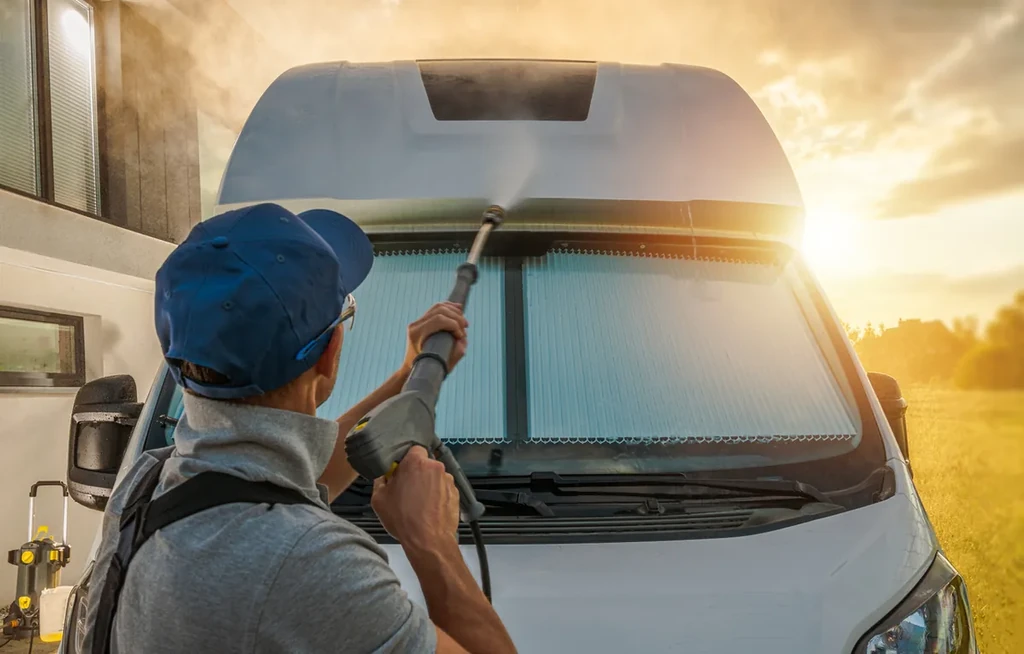
Whether it's an RV or a boat, you need to do deep cleaning. Even if you use a boat or RV cover, these recreational vehicles can get dust in the cold winter months. Boat or RV covers are useful in protecting the vehicles and window panes against direct sun exposure or harmful UV rays, but dust can still accumulate in the vehicle's body.
Use effective washing machines and vacuum cleaners to thoroughly clean or wash the boat or RV and its accessories, including interior parts and your RV's toilet bow. You can clean using non-toxic cleaning agents with the help of a hand pump or water pump conversion kit to push through the pipes or tanks.
Fill the Cooling System
You will have to empty your boat's cooling system during winterization to avoid freezing. This is because de-winterization requires the cooling system to be refilled and the antifreeze. You'll now need to flush and drain your cooling system. Also, check for cracks in your hoses, and after filling everything, reconnect the sparks plugs' wires.
Why Choose Our Boat and RV Storage Units?
At StorageMax, we have the best storage facilities in Ridgeland, MS 39157, and over 25 other locations across the United States. Our physicality offers secure, safe, and state-of-the-art storage units. We are dedicated and fully committed to providing quality self-storage facilities to boat and RV owners. Our customer services are excellent, and our clients are free to ask our Max Managers if you have any questions or visit our facilities at any given time. Contact us and let us serve your boat or RV storage needs in a facility with the best security setting and features in Ridgeland, MS 39157.